Building for Reuse: New Research Puts the Carbon Case for Modular Construction in Focus
What if buildings weren’t designed for a single use, but for their next life too?
That question is at the heart of the White Paper examining the carbon implications of reusable modular construction compared with traditional in-situ construction.
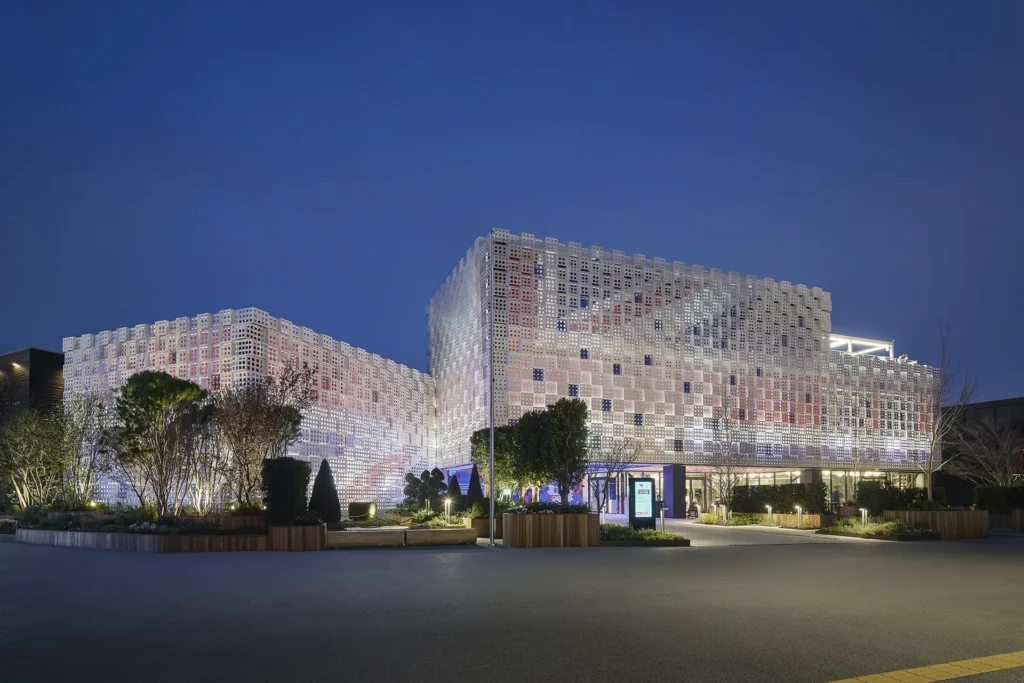
ES Global’s Global Modular System (GMS) was used to deliver the UK Pavilion and part of the Canadian Pavilion at the World Expo 2025 in Osaka, Japan.
Using these projects as case studies, students from the UCL Sustainability Lab examined the whole-life carbon implications of modular buildings designed to be dismantled and reused, compared with similar structures built using traditional construction methods.
Even on its first build, the GMS demonstrates material efficiency and lower environmental impacts. But the real carbon benefit comes when the system is reused.
Key findings
Life cycle assessment shows that, even on its first use, ES Global’s GMS offers material efficiencies and lower environmental impacts.
Reusing the GMS can reduce embodied carbon by 72–80% compared with traditional in-situ construction.
Reuse avoids the repeated production of carbon-intensive materials, supports circular economy principles and delivers improvements across wider environmental indicators.
The research identifies reusable modular systems as a significant route towards lower-carbon construction.
The White Paper was produced in collaboration with the UCL Sustainability Lab, supported by the UCL School of Management and Mott MacDonald
The summary report and full white paper is available HERE